
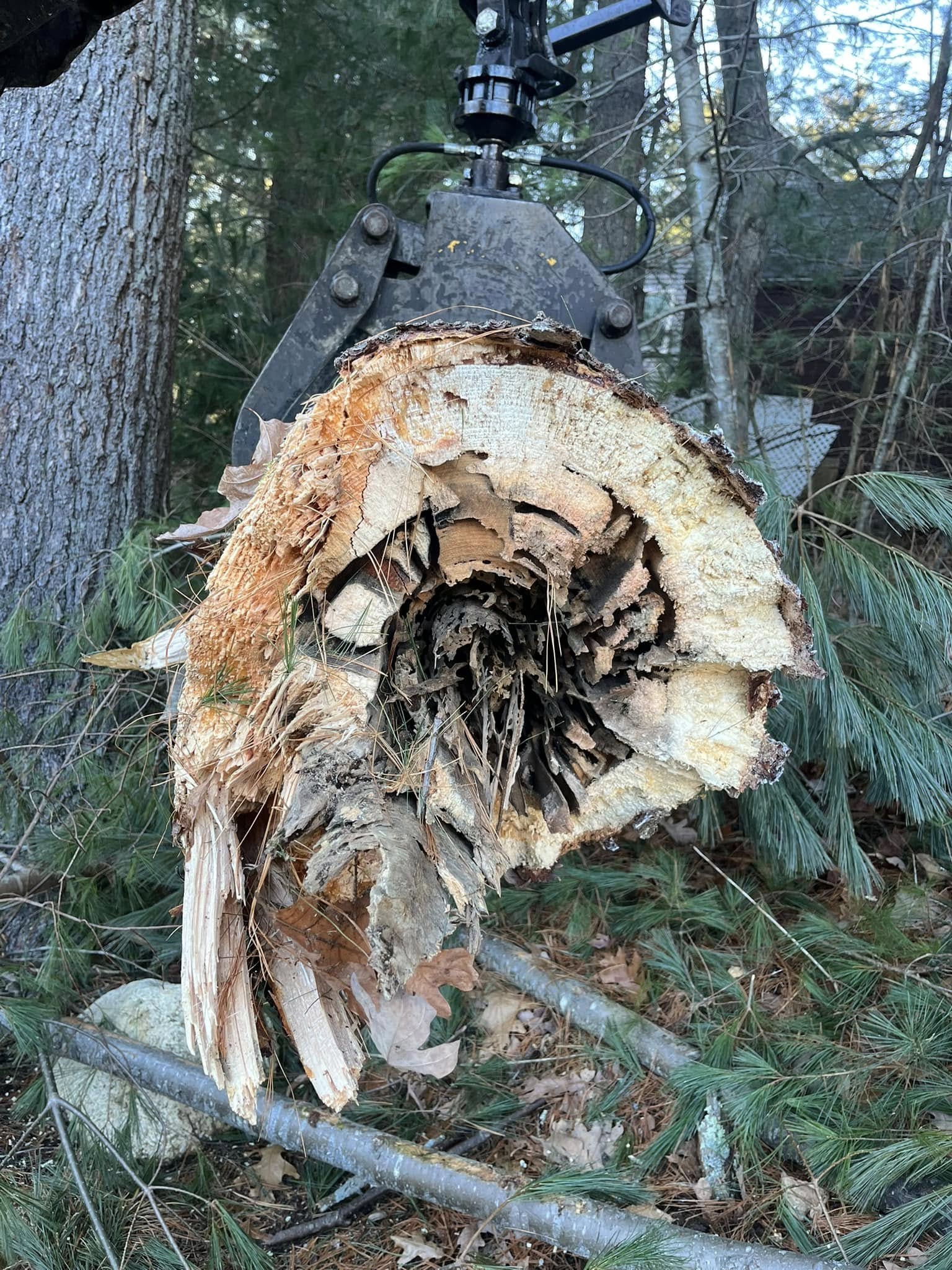
Large, mature trees can be valuable features of a property, but changes in their health or structure can sometimes create safety concerns. A tree does not necessarily need to be dead to become hazardous. Damaged branches, decay, root problems, severe leaning, storm damage, and other structural conditions can increase the possibility of part or all of a tree failing.
Recognizing potential warning signs can help property owners determine when professional tree service may be necessary. This is especially important when trees are located near homes, commercial buildings, roads, sidewalks, driveways, vehicles, or other frequently occupied areas.
At Colonial Tree Service, we help residential, commercial, and municipal property owners evaluate and address trees that may present safety concerns.
TL;DR: When a Tree is Becoming a Safety Hazard
- Dead or broken branches can create overhead hazards.
- Cracks, cavities, and decay may affect structural strength.
- A sudden or increasing lean can indicate a developing problem.
- Root damage can affect a tree’s stability.
- Storms, snow, ice, and strong winds can reveal or worsen existing weaknesses.
- Professional evaluation can help determine whether pruning or tree removal is appropriate.
Are Dead or Broken Branches Dangerous?
Dead branches can become weaker as they deteriorate, increasing the possibility that they may eventually fall.
Broken or partially attached limbs can create more immediate concerns, particularly when they remain suspended in the canopy. These branches may be difficult to see from the ground depending on the height and density of the tree.
Deadwood and damaged branches located above homes, driveways, sidewalks, parking areas, or other frequently used spaces should receive particular attention.
What Do Cracks and Cavities Mean?
Cracks, cavities, missing bark, and visible decay can indicate that part of a tree has been damaged or is deteriorating.
Not every cavity means a tree is unsafe. Trees can sometimes continue growing around injuries and remain standing for many years. However, significant decay or cracks affecting the trunk or major branches may reduce structural strength.
Changes in these areas over time can be particularly important, making periodic observation and professional evaluation useful.
Is a Leaning Tree Always a Safety Hazard?
Some trees naturally grow at an angle and remain stable. A leaning tree is therefore not automatically dangerous.
A new lean or a noticeable increase in an existing lean can be more concerning, especially following severe weather. Soil movement, lifting roots, cracks around the base, or exposed root systems may indicate that the tree’s stability has changed.
Trees leaning toward buildings, roads, parking areas, or other occupied spaces may warrant prompt professional attention.
Can Weather Make a Hazardous Tree More Dangerous?
New England weather can place significant stress on trees. Strong winds, thunderstorms, heavy rain, snow, and ice can add weight or force to branches and expose existing structural weaknesses.
A tree that has previously lost large limbs or suffered storm damage may also have areas requiring additional attention.
After severe weather, property owners should visually check their trees from a safe distance for broken branches, unusual leaning, split trunks, or other noticeable changes.
Does a Hazardous Tree Always Need to Be Removed?
Not necessarily. Some tree safety concerns can be addressed through professional trimming, pruning, deadwood removal, or continued monitoring.
Tree removal may become appropriate when a tree is dead, severely damaged, structurally compromised, or presents a level of risk that cannot reasonably be addressed through other tree care.
The decision should consider the condition of the tree, its location, and what could be affected if the tree or a major branch failed.
Why Choose Colonial Tree Service?
Colonial Tree Service provides professional tree services for residential, commercial, and municipal properties throughout Kingston and the South Shore. Our experienced team handles tree trimming and pruning, hazardous tree removal, deadwood and limb removal, storm cleanup, stump grinding, brush clearing, and 24/7 emergency tree service.
If you notice changes in a tree’s health or structure, addressing the concern early can help you better understand your options and maintain a safer property. Contact Colonial Tree Service today to get started.
Frequently Asked Questions
Does a dead tree need to be removed immediately?
The urgency depends on the tree’s size, condition, location, and surroundings. A dead tree near a home, road, parking area, or frequently occupied space may present a greater concern and should be professionally evaluated.
Should I worry about large branches hanging over my house?
Large branches over a structure are not automatically hazardous, but dead, damaged, cracked, or structurally weak limbs can create concerns. Professional tree trimming may be recommended depending on the branch and tree condition.
What should I do if a tree is damaged after a storm?
Stay away from hanging branches, fallen electrical lines, and unstable trees. Once the area is safe to access, a professional tree service can evaluate the damage and determine whether pruning, limb removal, cleanup, or complete tree removal is necessary.


